If you’re planning a new kitchen, converting a cupboard or simply fed up with looking at your boiler every morning, you’ve probably wondered whether moving it is possible. The short answer is yes, in many cases it is. Boiler relocation can be part of a wider upgrade or done on its own, but it needs proper planning and the right installation work. If you’re weighing up your options, this guide to boiler relocation will help you understand what’s involved.
I’ve worked in plenty of homes across the Wirral where the boiler was stuck in the most awkward place possible. Let’s look at what’s achievable and what you should think about before making a decision.
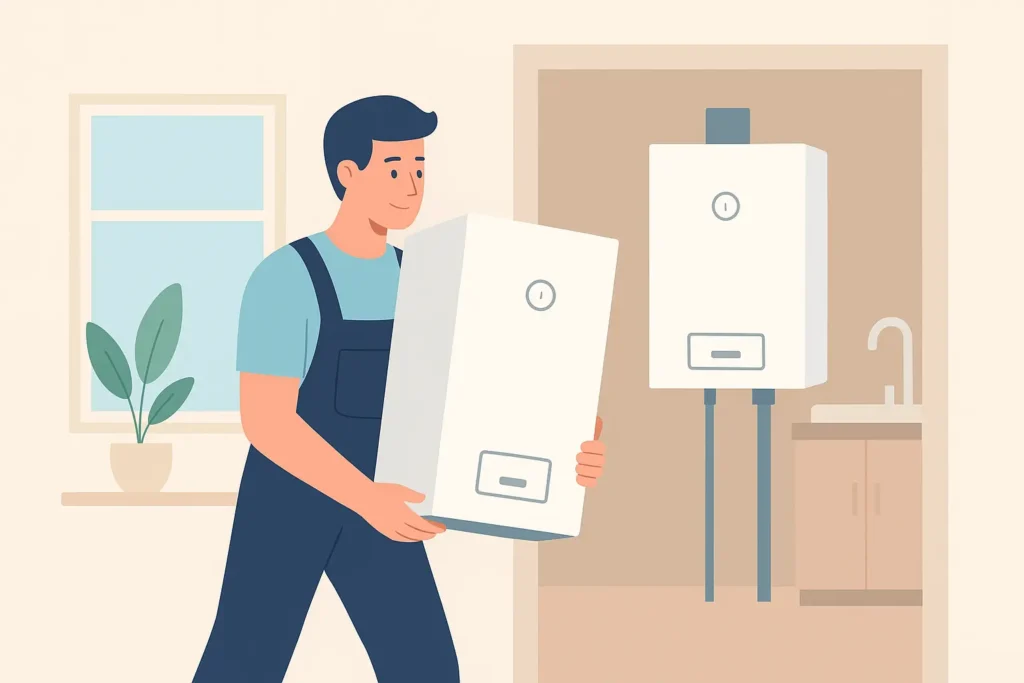
Why Homeowners Consider Moving a Boiler
Most people don’t wake up wanting to move their boiler. It usually comes up during renovations.
Common reasons I hear from customers in Greasby, Wallasey and Birkenhead include:
- Opening up a kitchen and removing wall cupboards
- Turning a bedroom cupboard into usable storage
- Relocating the boiler to the loft during an extension
- Upgrading to a new combi boiler and starting fresh in a better spot
- Reducing noise in a bedroom or study
Sometimes it’s about looks. Other times it’s practical. In older terraces especially, boilers can be squeezed into tight corners that make servicing awkward. Moving it can make life easier in the long run.
Is It Possible to Move a Boiler? Key Factors to Consider
In most properties, yes, a boiler can be moved. The real question is how straightforward and cost effective it will be.
1. Flue position
Your boiler needs a flue to safely expel exhaust gases outside. That means the new location must allow a suitable external wall or roof position. You cannot simply run a flue anywhere, it must meet clear distances from windows, doors and neighbouring properties.
2. Pipework routes
Gas pipes, central heating flow and return pipes and water mains all need rerouting. In some houses that’s fairly simple. In others, especially where floors are solid concrete, it can involve more disruption.
3. Condensate drain
Modern condensing boilers produce waste water which must run into a suitable drain. If there isn’t one nearby, we may need to install a new route with proper fall to prevent freezing or blockages.
4. Boiler type
If you already have a modern combi boiler, relocation is usually simpler than moving an old system boiler with a hot water cylinder. Sometimes it makes more sense to upgrade at the same time rather than move an ageing unit.
Costs and Regulations for Boiler Relocation in the UK
Moving a boiler is not a DIY job. By law, any gas work must be carried out by a Gas Safe registered engineer. That’s non negotiable.
Costs vary depending on:
- Distance between old and new location
- How much pipework needs extending
- Whether a new flue system is required
- Whether floors or walls need opening up
- If you are fitting a new boiler at the same time
As a rough guide, relocating a boiler in the same room might be far less involved than moving it from a kitchen to a loft. Each house is different, so a proper site visit is always the best way to get accurate advice.
Building Regulations also apply. After installation, the work must be registered and you should receive certification to confirm it complies. That’s important when selling your home.
The Boiler Relocation Process Explained Step-by-Step
Homeowners often ask what actually happens on the day. Here’s a simplified overview.
- We assess the new location and confirm flue and pipe routes.
- The boiler is safely isolated from gas and water supplies.
- Existing pipework is altered or extended to the new position.
- A new flue is installed according to manufacturer guidelines.
- The boiler is mounted securely and reconnected.
- The system is tested, commissioned and checked for gas tightness.
If floors need lifting or boxing in afterwards, that’s usually handled separately unless agreed in advance. In lived-in homes, we always try to keep disruption sensible and protect carpets and worktops. You’d be surprised how many boilers sit above freshly painted kitchen units, so care matters.
Benefits of Moving Your Boiler to a New Location
Done properly, relocating a boiler can genuinely improve how your home functions.
- Freeing up valuable kitchen cupboard space
- Improving access for servicing and repairs
- Reducing noise in bedrooms
- Creating a neater finish after renovations
- Potentially improving system efficiency if combined with an upgrade
I’ve seen homeowners gain an entire pantry cupboard simply by moving the boiler to the loft. In smaller houses, that extra storage makes a big difference.
Common Mistakes to Avoid When Relocating a Boiler
There are a few pitfalls that crop up time and again.
- Choosing a new location without checking flue clearance rules
- Forgetting about condensate drain positioning
- Trying to squeeze the boiler into an unventilated space
- Not allowing enough room around it for servicing
- Using someone who is not Gas Safe registered
Access for servicing is a big one. Manufacturers specify minimum clearances. If those aren’t met, you can run into warranty issues later on. It’s better to plan with maintenance in mind rather than hide the boiler so well that no one can reach it.
Regular servicing and proper checks are vital wherever your boiler lives, which is why ongoing service and repairs should always be part of the picture.
When to Call a Professional Heating Engineer
If you’re at the stage of sketching layouts or speaking with a kitchen fitter, that’s the right time to involve a heating engineer. Early advice can prevent expensive changes later.
Whether you’re in Greasby, Wallasey or Birkenhead, local property styles vary and that affects what’s practical. Loft space, wall construction and existing pipe routes all make a difference.
Moving a boiler is absolutely doable in many cases, but it’s not just a matter of shifting it from one wall to another. Safety, regulations and long term reliability all need to be considered. A proper survey will tell you whether relocation is sensible or whether upgrading and repositioning in one go would offer better value.
If you’d like tailored advice based on your home, the team at Perry’s Heating are always happy to have a straightforward conversation about your options. Need expert advice or a quote? Contact us today and we’ll help you decide the best way forward.